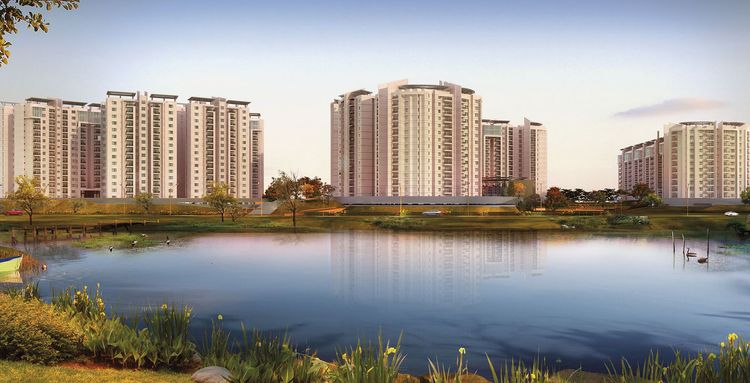
Mumbai's skyline is being rewritten one housing society at a time. Since the pandemic, roughly 910 societies have signed development agreements, unlocking around 330 acres of land across the city's most established micromarkets.
Source: The Hindu
For a city that ran out of new land years ago, redevelopment has become the only real growth story left.
But if you're a homebuyer or an existing resident weighing a redevelopment decision, the picture isn't one-sided. There's genuine upside here, and there are real trade-offs.
At Propsoch, we help homebuyers moving out of a redevelopment project and guide them through the risks. And if you want to evaluate an upcoming redevelopment project, we help you with detailed analysis of the project and the neighbourhood, including basic due diligence checks.
The Good: Why Redevelopment Works
Redevelopment essentially came out of necessity and it has been driving growth in Mumbai real estate. Naturally, there are many upsides to this story in terms of opening up new land parcels, reimagining the city's core and bringing modern amenities to areas that seem locked in the past.
Unlocks Land Where There is None
Mumbai's FSI constraints have long capped how much developers can build. Redevelopment projects typically come with additional or incentive FSI, letting old, low-rise societies transform into modern high-rises with far more usable space.
This is the single biggest reason developers are chasing these deals so aggressively, and why we see an influx of deals in the industry.
Genuinely Prime Hotspots
The Western Suburbs alone, Borivali, Andheri, and Bandra, account for about 139 acres of redevelopment activity, with Borivali leading at 176 development agreements.
Andheri follows with 108, and Bandra with 78, commanding some of the highest price/sq ft in the city (₹70,000-75,000 in Bandra).
Source: ET Realty
They're central, well-connected micromarkets getting a second life, which would have been an unimaginable scenario even a few years ago.
If you're looking at a redevelopment project in central Mumbai, our experts can help you navigate projects with detailed analysis across 80+ technical parameters, including neighbourhood analysis and floor plan & unit analysis, among others.
Upgraded Modern Homes
Large-scale projects like Motilal Nagar in Goregaon West illustrate the scale of what's possible. 3,700 families are set to receive free rehabilitation homes, with the broader project designed as a self-sustained township complete with clinics, green parks, senior citizen zones, and multi-level parking.
Cluster redevelopments, like the 53 societies coming together in Kandivali’s Chatrapati Shivaji Raje Complex, follow the same logic with better infrastructure and amenities than what existed before, at no direct cost to the original resident.
MHADA has undertaken around 11 redevelopment projects that total to 925 acres across Mumbai, which is slated to benefit 80,000 residents as their ageing colonies will get revamped.
Backed By Top Developers
When names like Adani (committing close to ₹1 lakh crore across redevelopment), Lodha, Sattva, and Sahana Group are signing these deals, it signals confidence that redevelopment isn't a band-aid solution.
Source: The Hindustan Times
It's becoming Mumbai's primary growth mechanism, with a widely cited Knight Frank report estimating redevelopment-driven housing supply at 44,000 homes by 2030.
The Bad: What Gets Lost in the Process
With land leases by the RLDA or builders developing projects in collaboration with organisations like MHADA, redevelopment has brought a lot of complexities that a regular buyer might find hard to navigate.
Some issues that we came across are:
Long Timeline at a Cost
Most redevelopment projects take 3-5 years to complete, and for larger townships like Motilal Nagar, the horizon stretches to 10-15 years.
That's a long time to live in transit accommodation, and it changes people's decisions in ways developers or even the redevelopment story don't always include upfront.
Repels Homeowners
Around 10% of homeowners choose not to move back to their redeveloped homes at all. Some relocate to their hometowns during the construction years and simply don't return.
Source: The Hindustan Times
Others use the disruption as a natural point to shift to more affordable peripheral areas, drawn by reduced congestion, a slower pace of life, and lower cost of living. Senior citizens are particularly likely to make this call, since a multi-year displacement is a heavier ask later in life.
If you'd like to stay updated with Mumbai real estate with other homebuyers and enthusiasts, join our exclusive community, The Hometrust Collective.


Early Exits are Common & Supported
Industry estimates suggest 20-30% of society members exit at the agreement stage itself, often through buyouts that large developers actively encourage.
It simplifies the deal for the developer, but it also means the community that eventually moves back is drastically different from the one that started the process.
Source: Ritesh Mehta, Senior Director and Head (North and West), JLL
Expectation Mismatch
In the Motilal Nagar project, resident groups had pushed for 2,400 sq. ft. carpet area homes, but the final numbers came in at 1,600 sq. ft.
Source: The Hindustan Times
Negotiations over unit size, amenities, and timelines are rarely as smooth as the initial announcement suggests, and residents often have less leverage than they expect once an agreement is signed.
Legal and Financial Maze
Development agreements, FSI allocations, rehabilitation shares, and builder commitments involve layers of documentation that most homeowners and buyers aren't equipped to evaluate on their own.
A society redevelopment or a resale unit inside a redeveloped project can look straightforward on the surface and still carry risk that only shows up during due diligence.
Where Propsoch Comes In
Redevelopment is reshaping Mumbai's best micromarkets, and that makes it an increasingly common part of the buying journey, whether you're looking at a unit inside a redevelopment project, evaluating a resale flat in a society that recently completed one, or trying to understand what a development agreement actually means for a property's future.
At Propsoch, we help homebuyers evaluate whether a redevelopment project is worth the wait with a data-backed view of the project and the micromarket around it, and if you’re trying to find a second home, we help you avoid entering the same redevelopment hassle again.
We have a timeline-specific search with strong consideration for factors like capital gains and investment ROI.
With redevelopment projects, a lot of it depends on the developer, the timeline you can realistically commit to, and the paperwork behind the promise. Our experts can help you navigate such scenarios so you can make confident decisions!