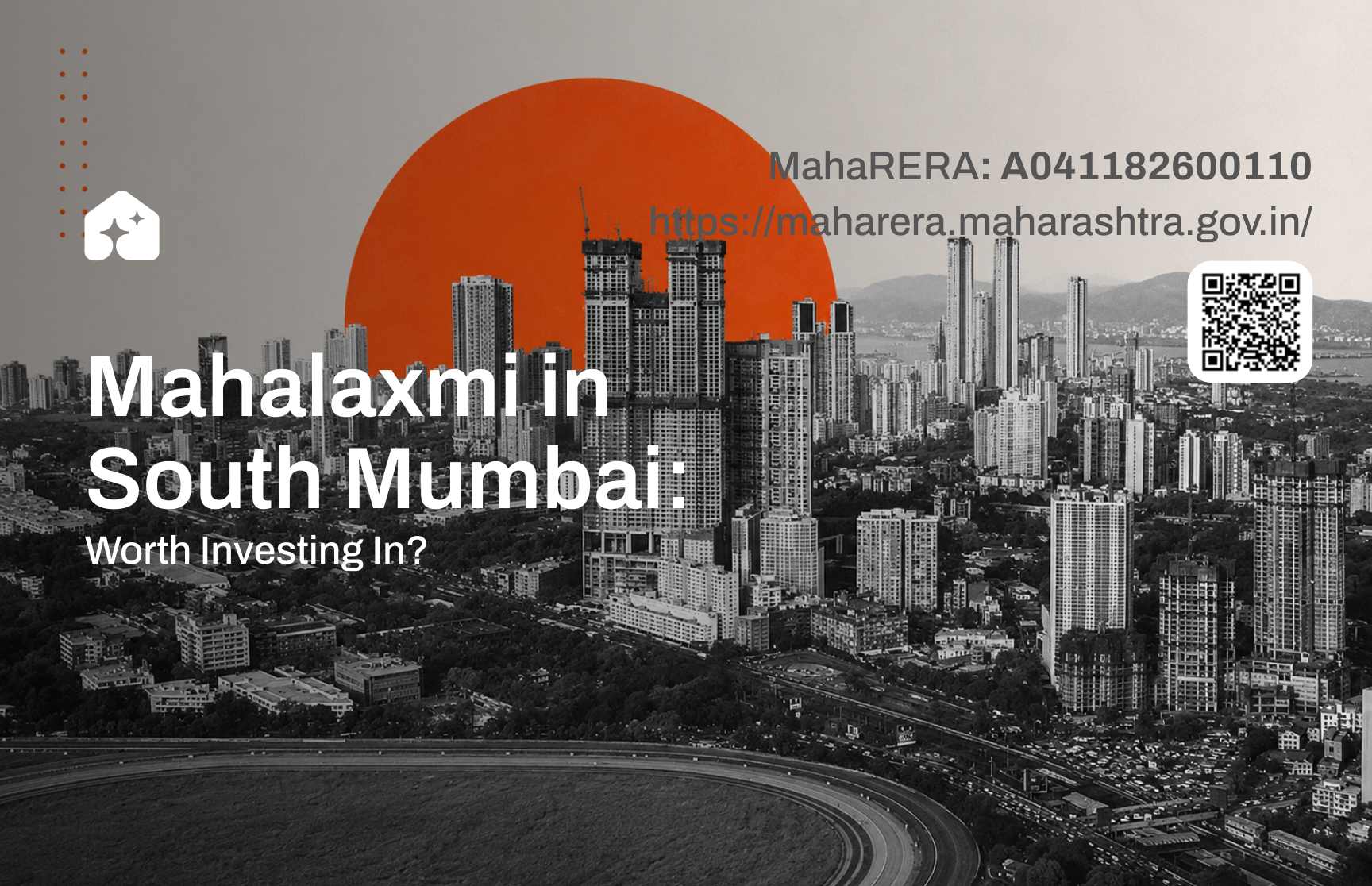
Mumbai Real Estate is a competitive market and very few micromarkets manage to combine heritage, location and luxury like Mahalaxmi.
Located between the central business districts and the emerging premium residential corridors to the North, Mahalaxmi occupies a position that is an ideal mid-point.
Unlike peripheral locations that rely solely on future potential through infrastructure, Mahalaxmi offers something rare, which is redevelopment opportunity within an already mature (and in-demand) urban ecosystem.
Excellent connectivity, limited land availability and strong economic fundamentals have consistently pushed prices upward and show no sign of reversing.
Here is what we discuss in this blog:
- What changed Mahalaxmi as a real estate micromarket?
- What is the price per square foot for Mahalaxmi in 2026?
- Is Mahalaxmi well-connected?
- Who are the main developers in Mahalaxmi?
- What are some legacy projects defining Mahalaxmi?
- What is Mahalaxmi's future?
How Did Mahalaxmi Grow?
Mahalaxmi was not always the coveted address it is today. For much of its past, the area was characterised by dense slum settlements and small working-class colonies.
Mahalaxmi's identity was shaped primarily by the Mahalaxmi Racecourse, one of India's oldest and most prestigious turf clubs, which serves as a green anchor in an otherwise densely packed micromarket.
The racecourse did more than provide entertainment for Mumbai's elite. It acted as a natural land buffer, preventing rapid development that swallowed other parts of central Mumbai.
This preservation of open space, almost by accident, would later become one of Mahalaxmi's most bankable real estate assets.
The Saat Rasta Turning Point
The real transformation of Mahalaxmi as a residential destination came with the development of Saat Rasta, something that upgraded Mumbai over the past 10-12 years.
The junction, which connects major arterial roads, dramatically improved flow in and out of the neighbourhood, unlocking its potential for residential development.
Saat Rasta did not just improve commutes; it repositioned Mahalaxmi in South Mumbai as a prime micromarket.
Developers took notice, and a wave of luxury projects followed, many of which now define the city's residential skyline.
Price Per Square Foot in Mahalaxmi 2026
Mahalaxmi real estate sits firmly in the luxury segment, with prices that reflect both the neighbourhood's scarcity and its status:
- Market Average Price/Sq Ft for Mahalaxmi in 2026: ₹70,000/sq ft
- Premium Pricing: ₹1 Lakh+/sq ft (sea-facing luxury apartments)
The gap between the entry point and the premium ceiling tells an important story about Mahalaxmi's property market.
Sea-facing apartments, particularly those in towers with views of the Arabian Sea or the racecourse, command a significant premium over other apartments or units.
What Sustains These Prices?
Limited land availability, history and heritage attached to the micromarket along with the presence of top developers like Lodha, Godrej and Raheja.
The price appreciation trajectory has been consistent and is expected to continue given the infrastructure improvements in the pipeline.
Infrastructure & Connectivity in Mahalaxmi
If there is one factor that separates Mahalaxmi from other aspirational South Mumbai micromarkets, it is connectivity. The neighbourhood benefits from all three: rail, road and metro access that very few micromarkets have.
With proximity to Worli, Tardeo and the Eastern Freeway, Mahalaxmi sits within minutes of Worli's BKC-adjacent offices and Tardeo's commercial spine.
Eastern Freeway: Provides direct connectivity to further South and the Eastern Suburbs.
Mumbai Metro Aqua Line: Connects the airport through Vivarea all the way to Fort. This means connectivity across the city without relying on road traffic.
Social Infrastructure: The Cathedral & John Connon School (one of Mumbai's most prestigious institutions) lies nearby, as does Jaslok Hospital, one of the city's top private medical facilities. Such infrastructure enhances livability and is a consistent draw for families.
While traffic congestion and limited open public space remain genuine challenges, having a set infrastructure base makes Mahalaxmi more resilient to accessibility concerns than many other micromarkets.
Top Builders in Mahalaxmi
Mahalaxmi has attracted Mumbai's most reputed developers, a reassuring signal of its popularity:
- K Raheja: Developer of Modern Vivarea, a landmark sea-facing residential complex that redefined Mahalaxmi's luxury benchmark.
- Lodha Group: One of India's largest developers, bringing their ultra-luxury and scale to the Mahalaxmi market.
- Godrej Properties: Developer of Planet Godrej, the neighbourhood's earliest and most iconic luxury project, which set the tone for the rest of the projects that followed.
- Piramal Realty: A trusted brand in South Mumbai's luxury segment, with projects that reflect the group's emphasis on design quality and delivery credibility.
- Prestige Group: This Bengaluru-based developer made its mark in Mahalaxmi by expanding its luxury residential footprint into this competitive market.
The presence of such developers, all competing within the same micromarket, is both a testament to Mahalaxmi's demand and a quality assurance for homebuyers.
Legacy Projects Defining Mahalaxmi
A handful of projects have come to represent Mahalaxmi's identity as a luxury address:
- Planet Godrej: This project is Mahalaxmi's earliest landmark luxury development, introduced at a time when the neighbourhood was not yet on the luxury map. It established Mahalaxmi's credentials as a viable premium residential address and laid the groundwork for everything that followed. A true legacy project in every sense.
- Raheja Vivarea (Modern Vivarea): K Raheja's flagship Mahalaxmi development offers a dual advantage that very few properties in Mumbai can claim, racecourse and Arabian Sea views. The Aqua Line connects this project to the north and south, giving residents airport connectivity previously unimaginable for a South Mumbai address.
- Lokhandwala Minerva (MahaRERA No: P51900008204): A development that went beyond local landmarks. Lokhandwala Minerva holds the distinction of being the tallest tower in India. Its presence in Mahalaxmi put the neighbourhood on a global real estate conversation.
All of the legacy projects shaped Mahalaxmi's real estate story for the good, which it still benefits from in driving its property prices and setting itself as a prime micromarket.
What Is Mahalaxmi's Future?
Mahalaxmi's fundamentals are strong, but the next decade could see a lot of changes in this micromarket's makeup.
Two major projects stand out:
- Mahalaxmi Central Park: A planned large-scale public green space that would address Mahalaxmi's livability limitation: the absence of accessible and quality open space. A central park would dramatically elevate the neighbourhood's quality of life and have a direct positive impact on surrounding property values.
- Mahalaxmi Elevated Railway Corridor: A proposed elevated rail infrastructure project designed to ease the traffic congestion in the area. The corridor could significantly reduce travel times through the neighbourhood and unlock new development potential along its routes.
Beyond these two projects, the broader South Mumbai infrastructure pipeline, including road widening, public improvements, and ongoing metro network expansion contributes to Mahalaxmi's long-term investment.
Final Thoughts
While limited open space and traffic bottlenecks exist, Mahalaxmi's location, heritage, and sea-facing residences position it as one of South Mumbai's most aspirational micromarkets.
With redevelopment, this image is further developed, where opportunities and infrastructure will bring renewed enthusiasm to this micromarket.
The buyers entering this market today, whether as end-users or investors, are positioning themselves in a neighbourhood that has consistently outperformed expectations and shows every sign of continuing to do so.
If you'd like to know more about this attractive market, book a free call with our market experts!