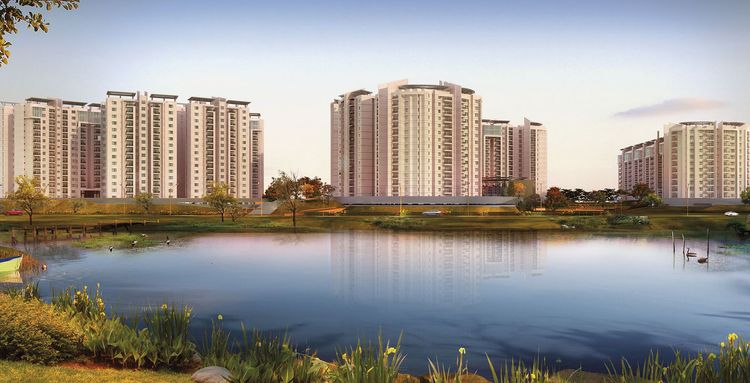
When Ramesh and Priya visited a premium apartment project in Whitefield, they were sold on the “lakefront views” and “lush greenery.”
What the sales team didn't mention? The “lake” was a polluted stormwater retention pond, and the “greenery” sat atop a tertiary drainage channel that flooded every monsoon.
They discovered this three months after booking, when it was too late to back out without losing their ₹5L token amount.
This isn't an isolated incident. In our analysis of residential properties across Bangalore, we found that nearly 70% have undisclosed site or environmental challenges that materially impact property value, safety, and livability.
For this analysis, we examined 611 properties across 45+ micromarkets in Bangalore from Devanahalli to Sarjapur, Whitefield to Kanakapura Road.
Here's what we learned, and why research-driven advisory is no longer optional in Indian real estate:
- Drainage Channels (Nalas) Are Everywhere
- High-Tension Lines = Hidden Health & Value Risk
- Public Roads Cutting Through Projects
- Environmental Degradation is Normalised
- Critical Red Flags (The Deal-Breakers)
As such issues are more common than you realise, it's challenging to keep track. Our experts perform thorough analyses of properties so you don't have to regret it months after you move into your dream home.
Drainage Channels (Nalas) Are Everywhere
Developers often market nalas in their master plans as “landscaped water features” or “natural streams.” In reality, they're stormwater drains that overflow during heavy rains and Bengaluru's infrastructure can't handle it.
Impact: Monsoon flooding, waterlogging, foundation damage, mosquito breeding, resale depreciation.
High-Tension Lines Pose Value Risk
While studies on EMF health effects remain inconclusive, buyer perception matters. Properties under or near HTLs consistently sell for less and take longer to move.
Impact: EMF exposure concerns, aesthetic blight, ~10-15% resale depreciation
What to look for:
- Minimum safe distance from 11 KV lines: 3.7 meters
- From 33 KV lines: 5 meters
- From 110 KV lines: 10 meters
Don't really know what high tension lines are? Read more about them!
Public Roads Cutting Through Projects
Developers acquire large land parcels with existing public roads or railway crossing (often unmaintained). Instead of rerouting, they incorporate them into the layout and call it connectivity.
If a road is classified as public, the developer cannot restrict access even if it runs through your gated community.
Impact: Privacy loss, noise pollution, security concerns, traffic congestion.
If you'd like us to analyse a property of your choice, reach out to our team of experts!
Environmental Degradation is Normalised
10% are in low lying land, making it prone to waterlogging
6% are near industrial zones, garbage facilities, or sewage plants
2.9% are situated close to or next to graveyards
Impact: Air quality issues, foul odors, pest problems, and long-term health risks, especially for children and elderly residents.
Critical Red Flags (The Deal-Breakers)
2 properties with polluting industries nearby
Properties can have active litigation over land ownership issues, among other possible issues. The credibility and strength of developers matter here as that will show how easily they’ll be able to solve such litigations.
Being situated next to polluting industries is a no-brainer as it can cause resale depreciation, as such industries are bound to pollute water and surrounding air.
It's extremely challenging to keep track of litigations or even know what builder to go for. Our advisors can help you safeguard your investments from such projects.
Why This Matters: The Real Cost of Information Asymmetry
Financial Impact:
- Resale depreciation of 10-20% for properties with undisclosed challenges
- Legal fees, repair costs, and lost opportunity costs add up
Emotional Toll:
- Regret, frustration, and loss of trust in the real estate ecosystem
- Stress from dealing with issues that could have been avoided
Systemic Problem:
- Developers face zero accountability for non-disclosure
- Brokers are incentivised to close deals, not protect buyers
- RERA enforcement remains weak on transparency violations
The Solution: Peace of Mind Reports
In an attempt to eliminate buyer’s remorse, our expert advisors collate data on 80+ technical parameters to give you a comprehensive report for informed decision-making.
Here are some of the factors that we take into account:
- Site Challenges: Waterlogging, Air Quality
- Project Challenges: Approach Road, Unit/Population Density
- City Development Plan (CDP) Analysis
- Neighbourhood: Garbage Dumps, Industries, Railways/Highways/Metros
- Tower Plan Analysis
- Unit Plan Overview
- Ventilation Analysis
- Vastu Analysis
- Pricing Analysis
- Market Analysis
- SWOT Summary
It tackles all challenges like flooding, proximity to high-tension lines, public roads, noise pollution, proximity to polluting industries or garbage dumps, and many more.
Find out more about this report here:
 Thinkr Proptech Private Limited
Final Thoughts
Undisclosed challenges are unfortunately common in Bengaluru Real Estate, and there's no centralised system that encourages this transparency.
Buyers are often uninformed about neighbourhood/project challenges such as how factors like dry/polluted lakes can affect liveability and property appreciation over the years.
This information asymmetry can cause financial stress and an emotional toll because homebuying is a difficult process as is. Our advisors can help you navigate the turbulent process of homebuying by empowering you with the information that you need to know before you make your decision.