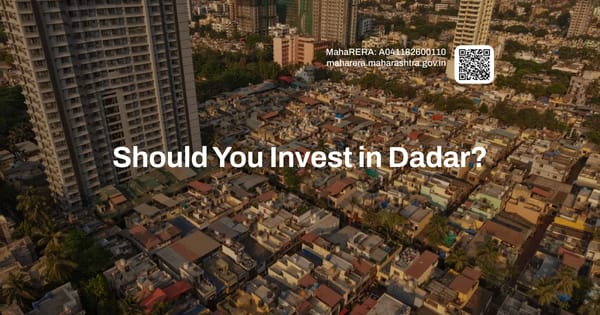
Stretching across Colaba's eastern docklands, Mazgaon, Byculla, Wadala and Sewri, this corridor is undergoing a gradual transformation from its industrial and port-led origins into a more prominent residential destination.
Unlike Mumbai's Western Seaboard, which is characterised by established luxury neighbourhoods such as Malabar Hill, Marine Drive and Worli, the Eastern Seaboard offers a different investment proposition. Its development is being driven by the redevelopment of old cessed buildings, textile mill land and former industrial properties, creating opportunities for new residential supply within an otherwise land-constrained city.
This difference is reflected in property prices. While premium locations along the Western Seaboard command ₹65,000-₹1.25 lakh per sq ft, locations such as Byculla, Mazgaon, Wadala and Sewri offer entry points ranging from approximately ₹19,000 to ₹47,000 per sq ft.
The corridor is also benefiting from infrastructure developments such as the Mumbai Trans Harbour Link (Atal Setu), Metro Line 3, the Sewri-Worli Elevated Connector and the proposed Metro Line 11.
However, the investment case is not uniform across the Eastern Seaboard. Byculla and Mazgaon are benefiting from active redevelopment, while Wadala and Sewri have a longer-term infrastructure-led growth proposition. The proposed Eastern Waterfront masterplan, which was once expected to transform this stretch into a major public waterfront destination, has also faced significant setbacks.
This guide examines the Eastern Seaboard's residential micro-markets, property prices, infrastructure, redevelopment potential and investment risks, while comparing its prospects with Mumbai's Western Seaboard.
In this guide:
- How did Mumbai's Eastern Seaboard develop?
- Which are the top residential micro-markets?
- What are the current property prices?
- How does the Eastern Seaboard compare with the Western Seaboard?
- What are the key infrastructure and redevelopment drivers?
- What are the risks of investing in the Eastern Seaboard?
- Which micro-markets offer the strongest investment potential?
How Did Mumbai's Eastern Seaboard Develop?
Mumbai's Eastern Seaboard has historically been shaped by the city's port, docklands and textile industries.
Unlike the Western Seaboard, which developed around colonial-era residential neighbourhoods, commercial districts and premium sea-facing properties, the eastern corridor was largely associated with industrial activity, port operations, warehouses and textile mills.
Locations such as Mazgaon, Byculla, Wadala and Sewri developed around these economic activities. The availability of large industrial land parcels and older residential buildings has also created opportunities for redevelopment.
As Mumbai's industrial economy evolved and several textile mills ceased operations, former industrial properties began transitioning into commercial and residential developments.
The redevelopment of mill land in Lower Parel and the surrounding belt was an early example of this transition. Over time, the redevelopment opportunity expanded towards Byculla, Mazgaon, Wadala and Sewri.
Today, the Eastern Seaboard's real estate market is being shaped by two major developments:
1. Redevelopment-led residential supply: Old cessed buildings, BDD chawls and former textile mill plots are being redeveloped into modern residential towers. This is creating new housing inventory within Mumbai's geographically constrained Island City.
2. Infrastructure-led connectivity: Projects such as Atal Setu, the Sewri-Worli Elevated Connector and the proposed Metro Line 11 are expected to improve connectivity across South Mumbai and the wider Mumbai Metropolitan Region.
The result is a corridor where several neighbourhoods are transitioning from their industrial origins into residential destinations, although the pace and nature of development differ across micro-markets.
What Are the Top Residential Micro-Markets Along Mumbai's Eastern Seaboard?
The Eastern Seaboard comprises several distinct residential markets. While Byculla and Mazgaon are seeing active redevelopment, Wadala and Sewri offer exposure to the broader infrastructure and industrial-to-residential transition.
1. Byculla and Byculla West
Byculla is one of the most established residential locations along Mumbai's Eastern Seaboard. Its central positioning between South Mumbai and the city's eastern neighbourhoods gives it access to several employment and commercial destinations.
Historically, Byculla developed as a residential and industrial neighbourhood, with a mix of older buildings, heritage properties and institutional establishments.
Today, it is emerging as one of the most active redevelopment markets within the Island City.
Property Prices: ₹26,000-₹47,000 per sq ft.
Connectivity and Infrastructure:
Byculla is connected through the Central Railway network, providing access to South Mumbai, the eastern suburbs and other parts of the city.
The Eastern Freeway provides road connectivity towards the eastern suburbs and South Mumbai, while the broader road network connects Byculla to Lower Parel, Fort and other commercial districts.
The locality also benefits from proximity to established social infrastructure, including hospitals, educational institutions and retail destinations.
Growth Drivers:
- Cessed-building redevelopment: DCPR 33(7) is enabling the redevelopment of older and dilapidated cessed buildings, creating opportunities for new residential towers.
- Central location: Byculla offers access to Fort, the South Mumbai CBD, Lower Parel and other employment destinations.
- New residential supply: Redevelopment is introducing modern residential inventory into established neighbourhoods.
- Established social infrastructure: Hospitals, schools, retail destinations and other amenities support end-user demand.
- Relative pricing advantage: Byculla offers a lower entry point compared with premium locations such as Worli, Tardeo and Marine Drive.
Investment Outlook:
Byculla is among the more compelling redevelopment-led residential markets within the Eastern Seaboard.
The combination of relatively lower entry prices, established infrastructure and an active redevelopment pipeline gives it a distinct investment proposition.
The report identifies Byculla and Byculla West as a preferred eastern-corridor investment destination, with some pockets recording approximately 5-20% appreciation over the preceding year.
However, redevelopment projects come with execution risks. Buyers should evaluate developer credentials, tenant consent, title documentation, project approvals and the actual stage of construction before investing.
2. Mazgaon
Mazgaon is a historic residential neighbourhood located between Byculla and the eastern docklands of South Mumbai.
Its proximity to Fort, Ballard Estate and the South Mumbai CBD gives it an important locational advantage. The locality has a mix of older residential buildings, heritage structures and newer developments.
Unlike premium western locations, Mazgaon offers a relatively lower entry point into the Island City, making it relevant for buyers looking for central South Mumbai exposure without paying the highest luxury-market prices.
Property Prices: ₹26,000-₹47,000 per sq ft.
Connectivity and Infrastructure:
Mazgaon benefits from access to the Eastern Freeway and the road network connecting it to Byculla, Fort and other parts of South Mumbai.
Its proximity to the Reay Road and Dockyard Road railway stations provides access to the Harbour Line.
The locality is also within reach of established commercial and institutional destinations in Fort and the wider South Mumbai CBD.
Growth Drivers:
- Cessed-building redevelopment: Older residential properties are being redeveloped under DCPR 33(7), introducing new residential supply.
- Proximity to Fort and CBD: Its location provides access to established employment and commercial districts.
- Redevelopment-led transformation: The conversion of older buildings into modern residential developments is gradually changing the housing stock.
- Relative affordability: Mazgaon offers a lower entry point than several established Western Seaboard locations.
- Central residential positioning: Its access to Byculla, Dockyard Road and other South Mumbai neighbourhoods supports end-user demand.
Investment Outlook:
Mazgaon offers a redevelopment-led investment proposition, with the potential to benefit from the gradual modernisation of its residential stock.
The report identifies Mazgaon as a selective investment opportunity, particularly for buyers looking for Island City exposure at a discount to Byculla West's premium pockets.
Its appeal lies in the combination of central connectivity and relatively lower pricing. However, the immediate neighbourhood, building condition and redevelopment status can vary considerably.
Buyers should also avoid assuming that the proposed Eastern Waterfront redevelopment will translate into additional residential or public waterfront amenities.
3. Wadala
Wadala is one of the Eastern Seaboard's most important emerging residential and infrastructure-led markets.
Historically associated with industrial activity, warehouses and port-related land, Wadala is gradually transitioning into a more prominent residential and commercial destination.
Its location between South Mumbai, the eastern suburbs and the MTHL corridor gives it an important position within the city's evolving connectivity network.
Property Prices: ₹19,000-₹26,000+ per sq ft.
Connectivity and Infrastructure:
Wadala benefits from railway connectivity through the Harbour Line and the broader suburban railway network.
The Eastern Freeway and the Mumbai Trans Harbour Link corridor improve its regional road connectivity.
The proposed Metro Line 11, connecting Wadala to GPO/CSMT, is an important future connectivity project. The underground corridor is expected to improve access between Wadala and South Mumbai's commercial districts.
However, as of the September 2026 report, the project remained in the planning and early-stage category, with completion expected beyond 2028.
Growth Drivers:
- Atal Setu connectivity: Its position near the MTHL corridor strengthens access towards Navi Mumbai.
- Metro Line 11: The proposed metro connection could improve access to South Mumbai's CBD.
- Industrial land transition: The gradual transformation of older industrial and warehouse properties provides opportunities for new development.
- Relatively lower entry prices: Wadala offers one of the lower price bands within South Mumbai's Island City.
- Proximity to commercial districts: Its location provides access to Fort, Lower Parel and the wider BKC employment corridor.
Investment Outlook:
Wadala offers a longer-term infrastructure-led investment opportunity.
Its lower entry price compared with the Western Seaboard and access to regional connectivity projects make it relevant for buyers looking for Island City exposure at a relatively lower investment amount.
However, the investment case should be based on existing infrastructure and realistic future connectivity rather than assuming that every proposed project will be completed on schedule.
The Eastern Waterfront masterplan is another important consideration. Its proposed residential-grade redevelopment has stalled, and the report specifically cautions against pricing Wadala on the assumption of a future public waterfront destination.
Wadala may therefore suit investors with a five-to-eight-year investment horizon who are comfortable with infrastructure and redevelopment execution risks.
4. Sewri
Sewri is one of the most closely watched locations along Mumbai's Eastern Seaboard because of its proximity to Atal Setu and the broader infrastructure corridor connecting Mumbai with Navi Mumbai.
Historically, Sewri was characterised by industrial land, warehouses, port-related activity and older residential settlements.
Its location between Wadala and South Mumbai, along with its access to the MTHL corridor, has brought it into focus as an emerging residential market.
Property Prices: ₹19,000-₹26,000+ per sq ft.
Connectivity and Infrastructure:
Sewri is connected through the Harbour Line railway network and the Eastern Freeway.
The Mumbai Trans Harbour Link begins at Sewri, connecting the Island City to Nhava Sheva in Navi Mumbai. Its operationalisation has strengthened road connectivity towards the mainland.
The Sewri-Worli Elevated Connector is another important infrastructure project. The proposed 4.5-km elevated corridor is expected to improve connectivity between Sewri and Worli, providing access towards the Western Seaboard and the wider road network.
As per the September 2026 report, the project was under construction, with a government target of Q4 2028.
The proposed Metro Line 11 could also improve connectivity between Wadala and South Mumbai, indirectly strengthening access from the wider eastern corridor.
Growth Drivers:
- Mumbai Trans Harbour Link: Operational connectivity to Navi Mumbai is one of Sewri's major locational advantages.
- Sewri-Worli Elevated Connector: The proposed road link could improve connectivity to Worli and the western side of the Island City.
- BDD Chawl redevelopment: Sewri is among the locations included in the broader BDD Chawl redevelopment programme.
- Residential redevelopment: The transition of industrial and older residential land into new developments could change the locality's housing profile.
- Relatively lower entry prices: Sewri offers a lower entry point compared with established luxury markets in South Mumbai.
Investment Outlook:
Sewri has a distinct infrastructure-led investment proposition.
The operational MTHL and the proposed Sewri-Worli Elevated Connector strengthen its connectivity profile, while redevelopment offers opportunities for new residential supply.
However, investors should be careful about the Eastern Waterfront narrative. The proposed residential waterfront masterplan has stalled, and the report indicates that parts of the Mumbai Port Authority's land have instead been leased for industrial and commercial use.
Sewri's investment case should therefore be evaluated on the basis of operational connectivity, redevelopment potential and the quality of individual projects rather than an assumed future waterfront transformation.
5. Lower Parel, Parel and Lalbaug: The Central Mill-Land Belt
Although not strictly part of the harbour-facing Eastern Seaboard, Lower Parel, Parel and Lalbaug form an important part of the broader eastern-corridor investment story.
These neighbourhoods developed around Mumbai's textile industry and are now among the city's most prominent redevelopment destinations.
The closure of several textile mills created opportunities for the conversion of former industrial land into residential, commercial and retail developments.
Today, the mill-land belt combines premium residential towers, commercial offices, shopping destinations and older residential buildings.
Property Prices: ₹40,000-₹1,00,000+ per sq ft.
Connectivity and Infrastructure:
Lower Parel and Parel benefit from railway connectivity through the Western and Central railway networks.
The area is also connected to the Eastern Freeway, Dr Annie Besant Road and other major arterial roads.
Its proximity to commercial districts such as Worli and Lower Parel makes it an important residential destination for professionals working in South Mumbai.
Social infrastructure includes Phoenix Palladium, High Street Phoenix, KEM Hospital, Tata Memorial Hospital and other established institutions.
Growth Drivers:
- Mill-land redevelopment: Former textile mill plots are being converted into residential and commercial developments.
- Employment access: The micro-market offers proximity to Lower Parel's commercial district and other major employment centres.
- Established social infrastructure: Retail, healthcare, hospitality and educational facilities support residential demand.
- New residential supply: Redevelopment is introducing modern residential towers into established neighbourhoods.
- Limited land availability: The availability of large development parcels within the Island City is restricted.
Investment Outlook:
The mill-land belt offers a wide range of investment opportunities, but pricing varies significantly depending on the building's age, location, specifications and redevelopment status.
The report highlights Century Mills in Lower Parel as an important redevelopment opportunity. The 23,822 sq m mill plot has a developer bid of ₹1,351 crore, with a rehabilitation component for mill-worker families and an open-market residential component.
This creates an opportunity for selective entry into a market where redevelopment is unlocking new supply.
However, buyers should evaluate each project individually, particularly where rehabilitation obligations, land titles and development approvals are involved.
What Are the Property Prices Along Mumbai's Eastern Seaboard?
The Eastern Seaboard offers some of the lowest entry points within Mumbai's original Island City limits.
According to the September 2026 residential market report, indicative capital values across the eastern corridor and central mill belt are as follows:
These are indicative capital-value ranges, not uniform transaction rates. Actual prices depend on project specifications, building vintage, location, redevelopment status and the nature of the property.
The pricing differential between the eastern and western corridors creates different investment propositions.
Byculla and Mazgaon offer relatively lower entry points with an active redevelopment pipeline. Wadala and Sewri have lower price bands but a greater dependence on future infrastructure and the gradual transformation of surrounding land.
The mill-land belt occupies a different position, with both premium new-build developments and older residential inventory contributing to a wide pricing range.
How Does the Eastern Seaboard Compare with the Western Seaboard?
Mumbai's Eastern and Western Seaboards represent two distinct residential investment markets within the Island City's original boundaries.
The Western Seaboard includes premium neighbourhoods such as Malabar Hill, Cuffe Parade, Marine Drive, Tardeo, Worli and Prabhadevi.
The Eastern Seaboard includes Mazgaon, Byculla, Wadala and Sewri, along with the central mill-land belt of Lower Parel, Parel and Lalbaug.
While both corridors are part of South Mumbai, their property prices, development cycles and investment drivers are considerably different.
1. Property Price Comparison
The Western Seaboard commands a substantial premium because of its established residential character, sea-facing locations, limited land availability and deep resale market.
Source: September 2026 residential market report.
The price difference is particularly significant in Wadala and Sewri, where indicative capital values are substantially lower than those in Worli and Malabar Hill.
Byculla and Mazgaon also offer a relatively lower entry point compared with Cuffe Parade and Tardeo.
However, the difference should not be interpreted as a guaranteed appreciation opportunity. The Western Seaboard's premium is supported by established demand and scarce land, while the Eastern Seaboard's potential depends more heavily on redevelopment execution and the maturation of its residential ecosystem.
2. Infrastructure and Connectivity
The Western Seaboard has already benefited from major infrastructure improvements.
The Coastal Road Phase 1, connecting Marine Lines and Worli, has been operational since March 2024. Metro Line 3, connecting Cuffe Parade to BKC and Aarey, is also fully operational.
These projects have strengthened connectivity across an already established residential market.
The Eastern Seaboard has a different infrastructure pipeline.
Atal Setu is operational, providing a direct road connection between Sewri and Nhava Sheva. The Sewri-Worli Elevated Connector remains under construction, while Metro Line 11 is still in its planning and early stages.
The western corridor's connectivity improvements have largely been delivered, whereas the eastern corridor has additional infrastructure milestones ahead.
3. Redevelopment and New Residential Supply
One of the biggest differences between the two corridors is the source of new residential supply.
The Western Seaboard is largely built out, with redevelopment and infill projects accounting for most new construction.
The Eastern Seaboard, on the other hand, has a more active redevelopment pipeline.
The conversion of cessed buildings, BDD chawls and former mill plots is creating opportunities for new residential towers.
Key projects include:
- BDD Chawl redevelopment across Worli, Naigaon, NM Joshi Marg and Sewri.
- DCPR 33(7) redevelopment of older cessed buildings, particularly in Byculla and Mazgaon.
- Century Mills redevelopment in Lower Parel.
- Other mill-land and industrial-property redevelopment opportunities.
This makes the Eastern Seaboard more dynamic from a new-supply perspective, although individual projects can have complex execution requirements.
4. Livability and Social Infrastructure
The Western Seaboard benefits from an established residential ecosystem, including premium schools, hospitals, clubs, retail destinations and public open spaces.
Locations such as Marine Drive and Worli also offer access to established promenades and sea-facing recreational spaces.
The Eastern Seaboard has a different character.
Byculla and Mazgaon benefit from established hospitals, educational institutions and access to the South Mumbai CBD. The mill-land belt also has access to major retail and healthcare destinations such as Phoenix Palladium, KEM Hospital and Tata Memorial Hospital.
However, public waterfront access remains limited along much of the eastern corridor because large stretches of the shoreline are controlled by port-related land holdings.
The residential environment is also more transitional in certain pockets, particularly where older industrial land is being redeveloped.
5. Rental Yield and Investment Proposition
The Western Seaboard is primarily a capital-preservation market.
The report indicates gross rental yields of approximately 2-3% in locations such as Malabar Hill, Cuffe Parade and Marine Drive.
The Eastern Seaboard offers marginally higher gross rental yields of approximately 3-4% in Byculla, Mazgaon and Wadala.
The difference is primarily attributable to lower capital values, while rental demand benefits from access to the same broader Fort and BKC employment base.
However, rental yields are still relatively modest across the Island City.
The Western Seaboard is better positioned for buyers prioritising scarcity, address value and resale liquidity. The Eastern Seaboard offers a redevelopment-led investment opportunity for buyers comfortable with longer holding periods and project-specific execution risks.
What Are the Key Growth Drivers for Mumbai's Eastern Seaboard?
The Eastern Seaboard's growth is being driven by a combination of connectivity improvements and the redevelopment of previously industrial or underutilised land.
The following developments are particularly relevant.
1. Mumbai Trans Harbour Link (Atal Setu)
The Mumbai Trans Harbour Link, popularly known as Atal Setu, is one of the most important infrastructure developments for the Eastern Seaboard.
The 21.8-km bridge connects Sewri in Mumbai with Nhava Sheva in Navi Mumbai and has been operational since January 2024.
Its primary benefit is improved road connectivity between Mumbai and Navi Mumbai, reducing dependence on the older road network.
For Sewri and Wadala, the bridge provides a regional connectivity advantage and improves access towards the airport and the wider Navi Mumbai economic corridor.
It also strengthens the position of the eastern side of the Island City as a residential alternative for buyers who need access to both Mumbai and Navi Mumbai.
2. Sewri-Worli Elevated Connector
The Sewri-Worli Elevated Connector is an important road infrastructure project connecting the eastern and western sides of the Island City.
The proposed 4.5-km elevated corridor is expected to improve connectivity between Sewri and Worli, linking the eastern corridor with the Western Seaboard and the broader road network.
As per the September 2026 report, construction was underway across seven packages, with a government completion target of Q4 2028.
For Sewri and Wadala, the project could improve access to Worli, Lower Parel and the western commercial districts.
However, buyers should account for construction timelines and actual access points when assessing its impact on individual projects.
3. Metro Line 11: Wadala to GPO/CSMT
Metro Line 11 is a proposed underground metro corridor connecting Wadala to GPO/CSMT in South Mumbai.
It is expected to provide a direct rapid-transit connection between the eastern side of the Island City and the South Mumbai CBD.
For Wadala, this could improve access to commercial destinations such as Fort and CSMT.
It could also improve the broader connectivity of the eastern corridor, including Byculla and Sewri, through interchange and connecting transport networks.
However, the report categorises Metro Line 11 as being in the planning and early-stage phase as of September 2026, with completion expected beyond 2028.
Buyers should therefore treat it as a future infrastructure catalyst rather than an existing connectivity advantage.
4. BDD Chawl Redevelopment
The redevelopment of Mumbai's BDD chawls is one of the most significant residential transformation projects within the Island City.
The programme covers approximately 207 chawls spread across 34 hectares of land.
The redevelopment involves replacing older chawl structures with modern residential towers, while providing rehabilitation housing for existing residents.
The locations include Worli, Naigaon, NM Joshi Marg and Sewri.
As per the report, the project was in execution, with 864 flats handed over in March 2026 and further handovers expected in phases.
For Sewri and the broader eastern corridor, this redevelopment represents an important change in the residential profile of the area.
It also introduces new residential supply within a market where large undeveloped land parcels are limited.
5. DCPR 33(7) Cessed-Building Redevelopment
DCPR 33(7) is an important redevelopment regulation for older and dilapidated cessed buildings in Mumbai.
It enables eligible buildings to be redeveloped, providing rehabilitation housing for existing tenants and allowing additional residential development under applicable regulations.
The policy is particularly relevant to the Eastern Seaboard because Byculla and Mazgaon have a significant concentration of older residential buildings.
The redevelopment of these properties can improve the quality of residential stock, introduce modern amenities and create new saleable inventory.
However, project-level execution depends on tenant consent, legal documentation, developer capacity and regulatory approvals.
6. Century Mills and the Central Mill-Land Redevelopment Pipeline
The redevelopment of former textile mill land is another important growth driver for the broader eastern-corridor investment story.
Century Mills in Lower Parel is a notable example.
The report identifies a 23,822 sq m mill plot, with a developer bid of ₹1,351 crore finalised in August 2026, subject to the required approval process.
The project includes rehabilitation housing for approximately 476-650 mill-worker families, alongside an open-market residential component.
Developments of this nature are important because they convert industrial-era land into new residential supply within the Island City.
They also contribute to the gradual transformation of Lower Parel, Parel and Lalbaug into mixed residential and commercial neighbourhoods.
What Happened to the Eastern Waterfront Development Plan?
The proposed Eastern Waterfront redevelopment was once considered one of the biggest potential growth drivers for the eastern side of Mumbai.
The plan covered approximately 966 acres of Mumbai Port Trust land, extending from Colaba towards Wadala.
It envisioned a transformation of the eastern waterfront through public promenades, parks, marinas and other urban amenities.
The development was expected to create a new public waterfront destination, potentially changing the residential and recreational appeal of Sewri, Wadala and Mazgaon.
However, the plan has stalled.
As highlighted in the September 2026 report, the Mumbai Port Authority has instead leased approximately 217 acres of land for 30-year industrial and commercial use. Residential development is not permitted under the current lease terms.
This has important implications for the eastern-corridor investment thesis.
Buyers should not assume that Sewri or Wadala will eventually develop into a second Marine Drive or benefit from a continuous residential-grade waterfront promenade.
The investment case for these locations should instead be based on operational connectivity, redevelopment activity and existing employment access.
The absence of the proposed waterfront transformation also limits the potential upside that some earlier market projections may have factored into property prices.
What Are the Risks of Investing in Mumbai's Eastern Seaboard?
While the Eastern Seaboard offers a relatively lower entry point and active redevelopment opportunities, buyers should account for several risks before investing.
1. Eastern Waterfront Uncertainty
The proposed residential-grade Eastern Waterfront masterplan has stalled.
The Mumbai Port Authority's decision to lease portions of its land for industrial and commercial use means that buyers should not assume future residential waterfront development.
This is particularly important for Sewri, Wadala and Mazgaon, where waterfront-led appreciation has been part of the market narrative.
2. Redevelopment Execution Risk
A significant portion of the Eastern Seaboard's new residential supply depends on redevelopment.
Projects involving cessed buildings, BDD chawls and mill land can have complex approval processes, tenant rehabilitation obligations and title structures.
Delays can affect possession timelines and project economics.
Buyers should evaluate the developer's financial strength, redevelopment agreements, approvals and project execution record rather than relying solely on the potential of the micro-market.
3. Infrastructure Completion Risk
While Atal Setu is operational, projects such as Metro Line 11 and the Sewri-Worli Elevated Connector are still at different stages of execution.
Any delays could affect the expected improvement in connectivity.
Buyers should distinguish between completed infrastructure and proposed or under-construction projects when calculating future appreciation.
4. Flooding and Drainage Concerns
Certain parts of the Eastern Seaboard, including low-lying pockets around Byculla and Sion, have exposure to monsoon waterlogging and flooding.
The risk is location-specific and should be evaluated at the individual project level.
Buyers should review historical waterlogging, building plinth levels, drainage infrastructure and flood mitigation measures.
5. Industrial Land Legacy
Several parts of the Eastern Seaboard are transitioning from industrial and port-related land use into residential development.
This transition can take time, and the surrounding environment may remain mixed-use for several years.
Buyers should evaluate the immediate neighbourhood, surrounding land use and proximity to industrial activity before purchasing a home.
6. Complex Land Titles and Legal Documentation
Redevelopment projects along the Eastern Seaboard can involve cessed buildings, mill-worker rehabilitation, old tenancy arrangements and Port Trust land.
These ownership structures can be more complex than conventional freehold residential transactions.
Buyers should undertake detailed title diligence, verify applicable land ownership and development rights, and review MahaRERA registrations before committing capital.
Which Eastern Seaboard Micro-Markets Are Better for Investment?
The Eastern Seaboard offers different investment opportunities depending on the buyer's budget, holding period and tolerance for redevelopment risk.
Byculla / Byculla West: For redevelopment-led appreciation
Byculla offers a relatively lower entry point compared with premium South Mumbai markets, along with an active cessed-building redevelopment pipeline.
Its established residential ecosystem and access to employment districts make it one of the more balanced investment options within the Eastern Seaboard.
The report identifies a three-to-five-year investment horizon for this market.
Mazgaon: For central South Mumbai exposure
Mazgaon offers access to Fort and the South Mumbai CBD at a relatively lower price point than premium western neighbourhoods.
Its redevelopment pipeline and central location make it relevant for buyers looking for a three-to-six-year investment horizon.
Wadala / Sewri: For longer-term infrastructure-led growth
Wadala and Sewri offer some of the lowest entry prices within the Island City.
Their proximity to Atal Setu, the proposed Metro Line 11 and the Sewri-Worli Elevated Connector provides a connectivity-led investment proposition.
However, the investment thesis should not depend on the stalled Eastern Waterfront masterplan.
These locations may suit investors with a five-to-eight-year horizon who are comfortable with infrastructure execution and residential transition risks.
Lower Parel / Lalbaug: For selective redevelopment opportunities
The central mill-land belt offers a wide range of residential properties, from older buildings to premium redevelopment towers.
Century Mills and other mill-land projects provide opportunities for selective investment, particularly where pricing is attractive relative to the quality and location of the development.
The report suggests a three-to-five-year horizon, with project selection playing a particularly important role.
Final Verdict: Is Mumbai's Eastern Seaboard Worth Investing In?
Mumbai's Eastern Seaboard is one of the few remaining parts of the Island City where meaningful residential redevelopment is taking place.
Unlike the Western Seaboard, where the investment case is driven by scarce land, established luxury neighbourhoods and capital preservation, the Eastern Seaboard offers a redevelopment-led opportunity at a relatively lower entry price.
Byculla and Mazgaon are benefiting from the redevelopment of older residential buildings, while Wadala and Sewri offer exposure to the region's evolving connectivity network.
The broader mill-land belt of Lower Parel, Parel and Lalbaug also offers opportunities through the conversion of former industrial land into residential developments.
Infrastructure projects such as Atal Setu, the Sewri-Worli Elevated Connector and Metro Line 11 could strengthen the corridor's connectivity over time.
However, the Eastern Seaboard should not be evaluated on the assumption that it will replicate the Western Seaboard's luxury waterfront character. The proposed Eastern Waterfront masterplan has stalled, and the residential redevelopment thesis needs to stand on its own fundamentals.
The Eastern Seaboard may suit you if:
- You want exposure to South Mumbai at a lower entry price than the premium western neighbourhoods.
- You are comfortable investing in redevelopment-led residential markets.
- You have a medium-to-long-term investment horizon.
- You are looking for opportunities in Byculla, Mazgaon, Wadala or Sewri.
- You are willing to undertake detailed legal and project-level due diligence.
For buyers prioritising established luxury addresses, resale liquidity and capital preservation, the Western Seaboard may remain the stronger proposition.
For buyers looking for relatively lower entry prices and potential redevelopment-led appreciation within the Island City, Byculla, Mazgaon and selective mill-belt developments offer opportunities worth evaluating.
At Propsoch, we help homebuyers assess these differences through independent market research, fair-price evaluation and detailed project due diligence, helping them identify opportunities that align with their investment objectives.
Eastern Seaboard Real Estate FAQs
What is the Eastern Seaboard of Mumbai?
Mumbai's Eastern Seaboard refers to the harbour-facing residential and redevelopment corridor within the Island City. It includes locations such as Mazgaon, Byculla, Wadala and Sewri, along with parts of the central mill-land belt.
What is the average property price on Mumbai's Eastern Seaboard?
Indicative capital values range from approximately ₹19,000-₹26,000+ per sq ft in Wadala and Sewri to ₹26,000-₹47,000 per sq ft in Byculla and Mazgaon. Prices vary depending on the exact location, building vintage and project specifications.
Which are the best areas to invest in along Mumbai's Eastern Seaboard?
Byculla, Mazgaon, Wadala and Sewri are important residential markets to evaluate. Byculla and Mazgaon offer redevelopment-led opportunities, while Wadala and Sewri have a longer-term infrastructure-led investment proposition.
Is Sewri a good location for property investment?
Sewri benefits from its proximity to Atal Setu and the proposed Sewri-Worli Elevated Connector. It also has exposure to the broader BDD Chawl redevelopment programme. However, buyers should not assume that the proposed Eastern Waterfront redevelopment will materialise as originally planned.
Is Wadala a good place to buy a home?
Wadala offers relatively lower entry prices within the Island City, railway connectivity and proximity to Atal Setu. The proposed Metro Line 11 could further improve its connectivity. Buyers should evaluate the immediate residential environment and the status of surrounding infrastructure.
Why is Byculla attracting real estate investment?
Byculla has an active cessed-building redevelopment pipeline under DCPR 33(7). Its central location, established social infrastructure and relatively lower prices compared with premium South Mumbai neighbourhoods make it an important redevelopment-led residential market.
What is the difference between the Eastern and Western Seaboard?
The Western Seaboard comprises established premium neighbourhoods such as Malabar Hill, Cuffe Parade, Marine Drive and Worli. Its investment proposition is based on scarce land, established demand and capital preservation.
The Eastern Seaboard includes Byculla, Mazgaon, Wadala and Sewri. Its investment proposition is based more on redevelopment, relatively lower entry prices and future connectivity improvements.
What is the rental yield on the Eastern Seaboard?
According to the September 2026 market report, gross rental yields in Byculla, Mazgaon and Wadala are approximately 3-4%. These are indicative market estimates and actual yields depend on purchase price, achievable rent, vacancy and maintenance expenses.
What happened to the Eastern Waterfront development?
The proposed redevelopment of approximately 966 acres of Mumbai Port Trust land has stalled. As of September 2026, approximately 217 acres had instead been leased for 30-year industrial and commercial use, with residential development not permitted under the current terms.
What is Metro Line 11 and how will it affect Wadala?
Metro Line 11 is a proposed underground metro corridor connecting Wadala to GPO/CSMT in South Mumbai. It could improve connectivity between Wadala and the South Mumbai CBD. However, it remained in the planning and early-stage category as of September 2026.
What are the biggest risks of investing in the Eastern Seaboard?
The key risks include redevelopment execution delays, complex land titles, infrastructure completion uncertainty, localised flooding and the stalled Eastern Waterfront plan. Buyers should undertake detailed legal and technical due diligence before investing.